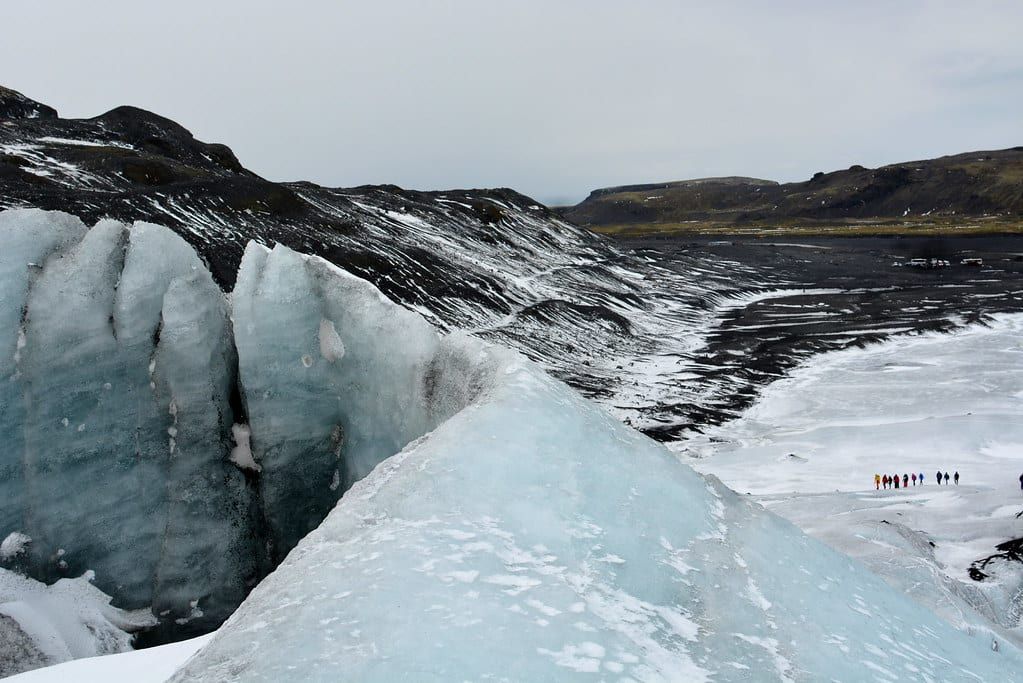
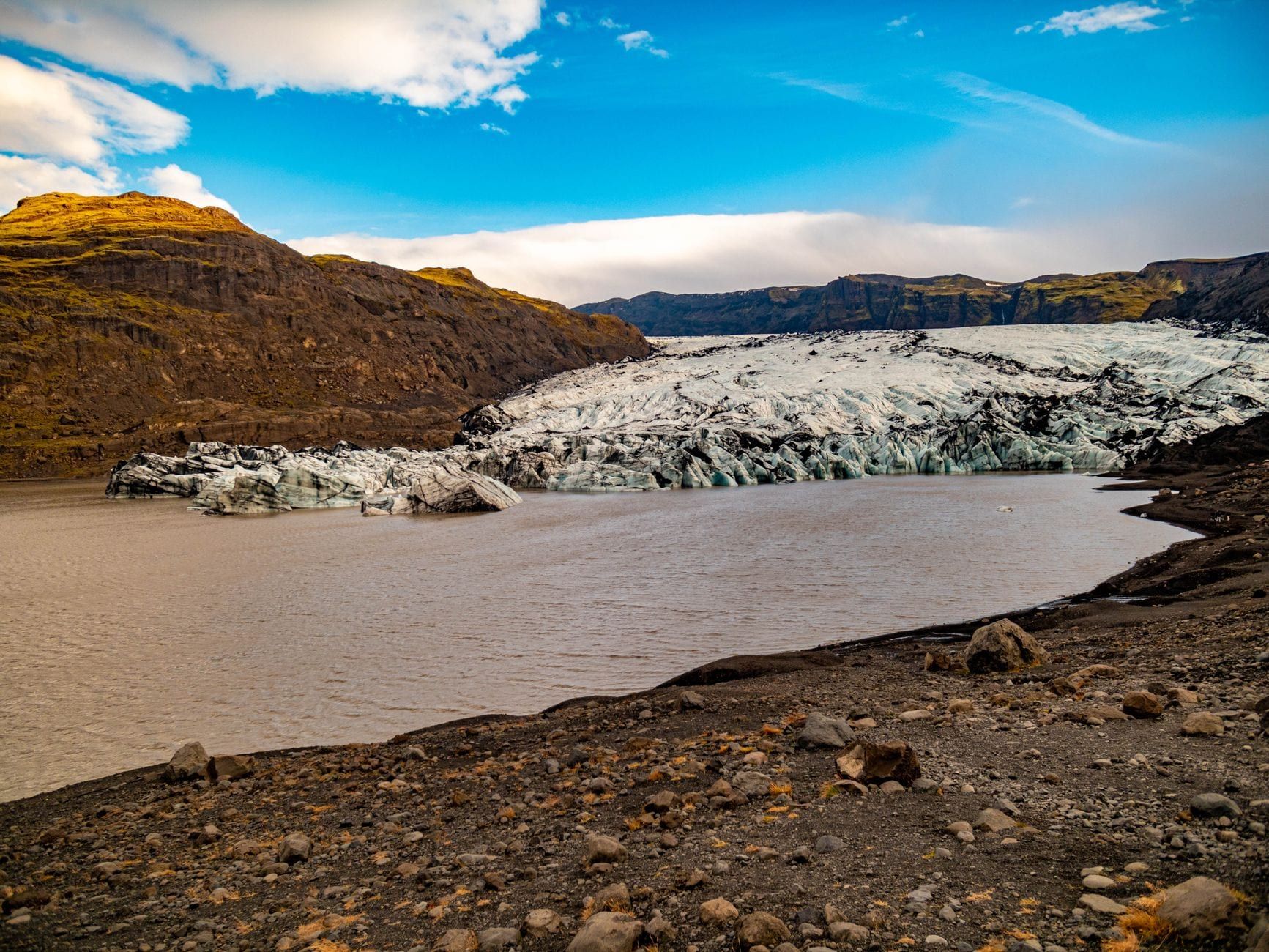
Sólheimajökull is the glacier most South Coast road-trippers actually end up walking on, not just photographing from a pullout. A paved side road runs almost to its snout, so twenty minutes after parking you can be standing on a black-and-blue ice tongue spilling off the Mýrdalsjökull ice cap. Every hike here runs with a certified guide — crevasses and unstable ridges rule out going it alone.
This guide covers what a Sólheimajökull glacier hike actually involves before you book: tour types and costs, the gear you need versus what's provided, fitness and age limits, and how to get there from Reykjavík. It also untangles glacier hikes from the separate winter ice-cave tours, a point that trips up a lot of first-time visitors.
What Is Sólheimajökull and Why Hike It
Sólheimajökull is an outlet glacier tongue draining off the southwestern edge of the Mýrdalsjökull ice cap, which sits directly over the Katla volcanic system near Eyjafjallajökull. The tongue runs about 8 kilometers (5 miles) long and just over 2 kilometers (a mile) wide, though its edge blurs into the parent ice cap so it reads as bigger on the ground. What sets the ice apart visually is the streaking: dark bands of volcanic ash, including a layer from the 2010 Eyjafjallajökull eruption, cut across the blue-white ice in ridges that guides point out on every hike.
Glaciologists have tracked Sólheimajökull's edge since the mid-1990s, and it's retreating fast — about 60 meters (200 feet) a year on average, with 887 meters of retreat documented between 1995 and 2014 by the Glacier Research Society of Iceland. That speed earned it a nickname among researchers: a 'climate glacier,' one that reacts to warming faster than most. Meltwater has also built out a proglacial lagoon at the snout, dotted with small icebergs that weren't there a generation ago. For visitors, the practical upside is access: a paved side road runs almost to the ice, letting hikers reach ridges, crevasses, and moulins that on most Icelandic glaciers would take a much longer approach on foot. Read more about the glacier's history and highlights before you go.
Can You Hike Sólheimajökull Without a Guide?
No operator sells an unguided glacier walk here, and for good reason. Hidden crevasses, moulins, and shifting ice ridges make the surface dangerous to read without training, and a July 2026 hazard notice from the Icelandic Meteorological Office flagged an unstable ice ridge and rockfall risk near the glacier's margin, prompting several operators to pause trips while they scouted safer routes. Walking onto the ice on your own isn't formally illegal, but every guide company and the IMO itself advise strongly against it.
What you can do for free is walk the gravel trail from the parking lot to the viewpoint — a flat, roughly 500-meter stretch that takes 10 to 20 minutes each way and gets you close-up views of the ice snout and the lagoon without a booking. Stepping past the marked boundary onto the glacier itself requires a certified guide and the crampons, harness, ice axe, and helmet that only guided tours provide. Check current opening hours and fees before you drive out, since access can shift with little notice.
Glacier Hike Tour Options and What They Cost
Three tour categories cover most bookings. A standard glacier walk keeps you on relatively flat-to-moderate ice for about 2.5 to 3 hours, roughly 6 kilometers (3.7 miles) of walking once you're on the glacier. An ice-climbing add-on tacks on rope work up a vertical ice face, stretching the outing to 4 to 5.5 hours total. South Coast combo tours bundle the hike with waterfall or black-sand-beach stops, run from Reykjavík, and take up most of a day once transport is factored in. Small-group operators generally charge more than larger bus-based tours, but you get more guide attention on the ice.
| Tour type | Typical duration | Price range (per person) |
|---|---|---|
| Standard glacier walk | 2.5–3 hours on ice | ISK 11,000–20,000 (~$80–$150) |
| Ice climbing add-on | 4–5.5 hours total | ISK 25,000–35,000+ (~$180–$250+) |
| South Coast combo (from Reykjavík) | Full day, 2.5–3 hrs transport each way | Roughly $130–$250 |
Book the standard walk if you just want solid ice time without a big price jump; add ice climbing if you want an adrenaline stop and don't mind the extra hours and cost. Combo tours make sense if you don't have a car and want Skógafoss or Reynisfjara folded into the same day. Compare current departures on the glacier hike tours page.
What's Included: Safety Equipment and Guides
Every operator supplies the technical gear: crampons that strap over your boots, a climbing harness, an ice axe, and a helmet. You don't rent or buy any of this yourself — it's built into the tour price and fitted at the start, usually in the parking area or a short walk from it. A certified glacier guide leads the group, runs a safety briefing on reading the ice and using crampons before anyone sets foot on the glacier, and sets the roped route around crevasses and moulins.
Groups typically move together at the guide's pace, with regular stops to check gear and point out features like ash bands or meltwater channels. If you're the reason for slower progress uphill, don't sweat it — guides plan routes around the group's mixed fitness levels rather than the fastest hiker. Bring your own daypack for water and a camera; nothing else technical is expected of you.
What to Wear and Pack
Glacier air is colder and windier than the valley below, even on a sunny July afternoon, so dress for wind chill rather than the forecast. Layering matters more than any single piece of gear, and cotton is the one fabric to leave at home since it stays wet once it's soaked.
- Sturdy, waterproof hiking boots with ankle support (rentals run about 1,500 ISK if needed)
- A warm base layer plus a windproof, waterproof outer shell
- Gloves, a warm hat, and sunglasses for glare off the ice
- Your own daypack, water, and a camera or phone
Operators supply crampons, harness, ice axe, and helmet, so skip buying any of that. Sneakers and sandals aren't accepted on the ice — if your boots are borderline, ask the operator ahead of time rather than finding out at the parking lot.
Difficulty, Fitness Level, and Age Requirements
Standard hikes ask for reasonable fitness rather than athletic conditioning — expect uneven footing, occasional steep sections, and a few kilometers of walking in crampons, which take some getting used to even on flat ice. Most operators set a minimum age around 8 years old, plus a minimum shoe size near EU 34-35 so crampons fit properly, and children must stay with an adult the whole time. Ice-climbing add-ons raise the bar: higher minimum ages and a base level of upper-body fitness for the rope work.
Seniors and reasonably mobile travelers generally do fine on standard hikes, though anyone with knee, hip, or balance issues should ask the operator about terrain difficulty before booking. The route onto the ice itself isn't wheelchair accessible — crampons and uneven ice rule that out — but the flat gravel path from the parking lot to the viewpoint is manageable for most wheelchair users with assistance, and it's free. If you're unsure whether the hike suits your fitness level, call the operator directly; they'd rather answer questions in advance than turn someone back at the ice edge.
How to Get to Sólheimajökull
From Reykjavík, it's about 158 kilometers (98 miles) via Route 1, the Ring Road — figure roughly 2 hours and 15 minutes of driving in good conditions. Watch for the turnoff onto Road 221 (Sólheimajökulsvegur), a short paved side road that runs directly to the glacier's parking lot, passing Seljalandsfoss and Skógafoss along the way if you're doing a South Coast loop. Coming from Vík, it's shorter: about 32 kilometers (20 miles), roughly 20 to 30 minutes west on Route 1 before turning onto Road 221. See full directions and route options for both approaches.
Guided tours either pick you up in Reykjavík or meet you at the parking lot itself, a 'meet on location' option that's useful if you're already road-tripping and don't want a long bus transfer bolted onto your hike. Parking costs 750 ISK (about $5.50), paid through the Parka app within 24 hours, so you don't need signal or cash on the spot. There's no direct public bus to the glacier; travelers without a car usually take a guided day tour from Reykjavík or ride Strætó to Vík and arrange onward transport for the last 32 kilometers.
Best Time of Year to Hike Sólheimajökull
Tours run year-round, but the season changes what you get. May through September brings the longest daylight, the easiest footing, and the widest activity list — this is the only window operators run kayaking trips on the glacier lagoon alongside standard hikes. Winter, December through February, means icy access trails, short daylight, and storms that can shut down Road 221 or force a last-minute cancellation. If your schedule has any flexibility, summer gives you a much better shot at the tour actually running as booked.
Cancellations happen most often in winter due to wind or an unstable access route; most operators offer a rebooking or refund rather than a forced go on a day they've flagged unsafe. Check en.vedur.is for the weather forecast and umferdin.is for road conditions any time between October and April. In summer, book your slot a few days ahead — June through August departures fill up, especially the early morning starts.
Pairing the Hike with Other South Coast Sights
Sólheimajökull sits conveniently between three of the South Coast's best-known stops, so a glacier-hike day rarely stands alone on the itinerary.
Skógafoss Waterfall
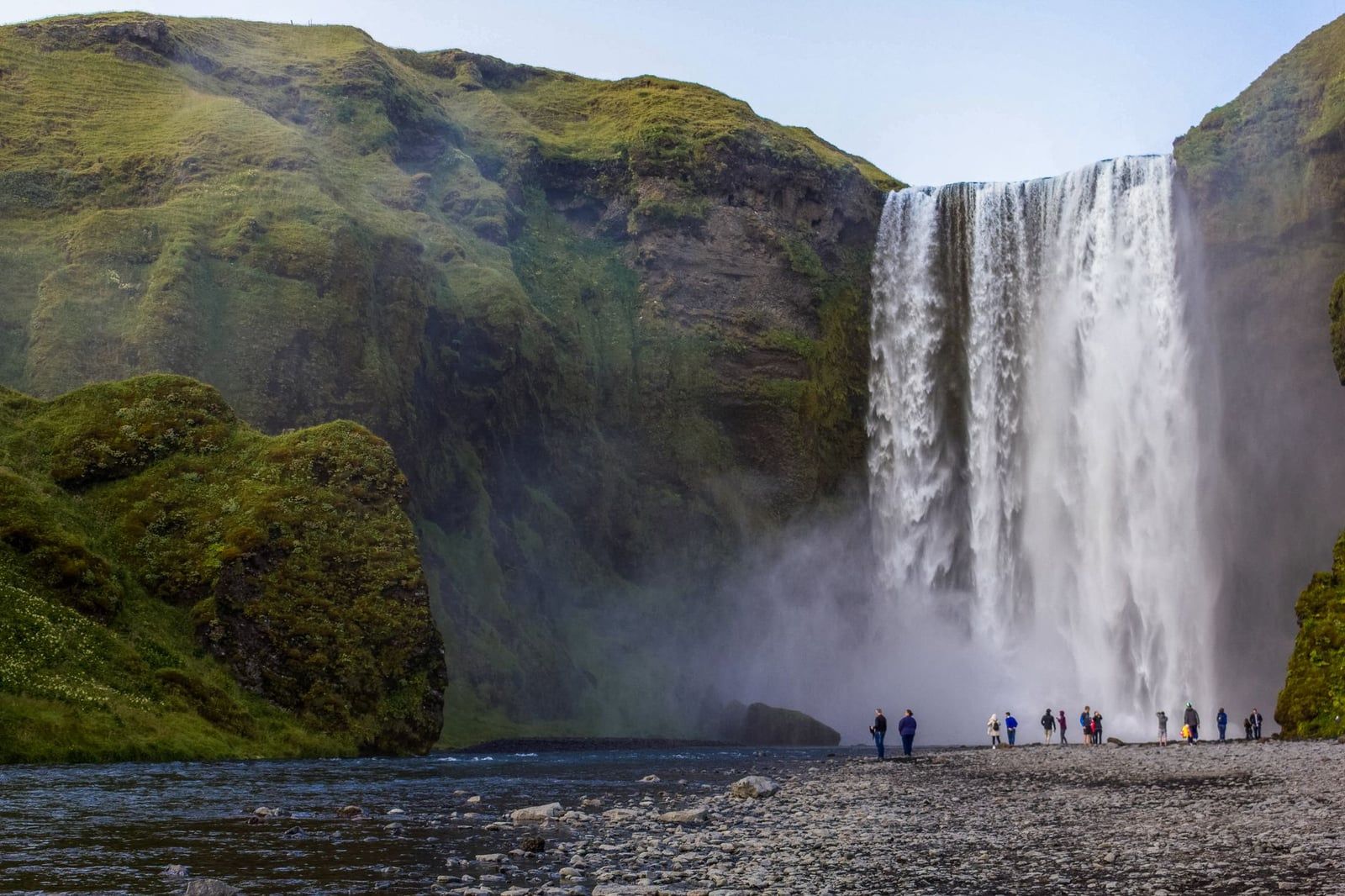
Skógafoss sits about 30 kilometers west of Sólheimajökull, a 60-meter curtain of water wide enough to soak anyone standing near its base. A steep staircase climbs to a platform at the top for a look back over the black sand plain toward the coast. It's an easy stop to bolt onto either end of a glacier-hike day.
Reynisfjara Black Sand Beach
Reynisfjara is 30 to 40 minutes east, near Vík, and it's one of the most photographed stretches of coast in Iceland: hexagonal basalt columns, the sea stacks of Reynisdrangar offshore, and waves that pull much harder than they look. Stay well back from the waterline — the surf here has caught visitors off guard more than once.
Sólheimasandur Plane Wreck
The rusted hull of a U.S. Navy DC-3 that crash-landed on the black sand in 1973 sits about 15 to 20 minutes west of the glacier. Reaching it means a roughly 4-kilometer walk from the dedicated parking area, or a shuttle, across flat, exposed sand with no shelter — plan for wind either way.
For one South Coast day, a workable order running east from Reykjavík is Seljalandsfoss, then Skógafoss, then the glacier hike at Sólheimajökull, then the plane wreck, finishing at Reynisfjara before continuing to Vík for the night. That sequence keeps backtracking to a minimum and lands you at Reynisfjara in better afternoon light. Start early — the glacier hike alone eats 3 to 5 hours, and daylight is the real constraint outside summer.
Sólheimajökull Ice Caves vs Glacier Hikes: Don't Confuse Them
Ice caves and glacier hikes are two different products, even though both put you on Sólheimajökull. Natural ice caves form and stay stable only when winter cold locks the ice structure in place, which is why cave tours run in the colder months and disappear once meltwater starts moving through the glacier again in spring. Glacier hikes, by contrast, stay on the surface and run all year, since they don't depend on a cave holding its shape. Booking the wrong one for your travel dates is the most common mix-up searchers run into.
| Glacier Hike | Ice Cave Tour | |
|---|---|---|
| Season | Year-round | Winter months only, when caves are stable |
| Terrain | Surface ice — ridges, crevasses, moulins | Inside natural ice formations |
| Duration | 2.5–5.5 hours depending on add-ons | Varies by operator, typically a few hours |
| Gear | Crampons, harness, ice axe, helmet | Crampons and helmet; harness less commonly used |
If your trip lands in summer, the ice cave is off the table regardless of which operator you call — book the surface hike instead. Traveling between November and March, you can usually do both a hike and a cave visit if your itinerary has the time. Compare current ice cave tour options and the full range of glacier tours before deciding.
FAQ: Sólheimajökull Glacier Hike
Can you hike Sólheimajökull glacier without a guide?
No — every operator requires a certified glacier guide, and none sell an unguided walk onto the ice. Hidden crevasses and an unstable margin make it genuinely dangerous to try alone, and recent hazard notices from the Icelandic Meteorological Office have only reinforced that. You're free to walk to the viewpoint on your own for a look at the ice from a safe distance.
How long does a Sólheimajökull glacier hike take?
Standard walks run about 2.5 to 3 hours on the ice. Add ice climbing and the whole outing stretches to roughly 4 to 5.5 hours once you count gear-up and the walk to and from the parking lot.
How far is Sólheimajökull from Reykjavík?
It's about 158 kilometers (98 miles) via Route 1, roughly a 2-hour-15-minute drive before you turn onto the short paved Road 221 that leads to the parking lot.
What should I wear for a glacier hike on Sólheimajökull?
Sturdy, waterproof hiking boots with ankle support, warm layers under a windproof and waterproof shell, plus gloves, a hat, and sunglasses for the glare off the ice. Crampons, harness, ice axe, and helmet come with the tour, so you don't need to buy any of that.
Is Sólheimajökull good for families or beginners?
Standard hikes work for reasonably fit beginners and most older children, with a minimum age around 8 and a minimum shoe size near EU 34-35 to fit crampons properly. Ice climbing sets a higher bar on both age and fitness, so keep younger kids to the standard walk.
Are there ice caves at Sólheimajökull?
Yes, but only as a winter product — natural caves stay stable enough to enter when temperatures are cold enough to lock the ice in place. In summer, the surface glacier hike is what's on offer instead.
Can a Sólheimajökull glacier hike be combined with other South Coast stops?
Yes. Skógafoss is about 30 kilometers west, the Sólheimasandur plane wreck is 15 to 20 minutes west, and Reynisfjara black sand beach is 30 to 40 minutes east near Vík — all workable additions to the same day.