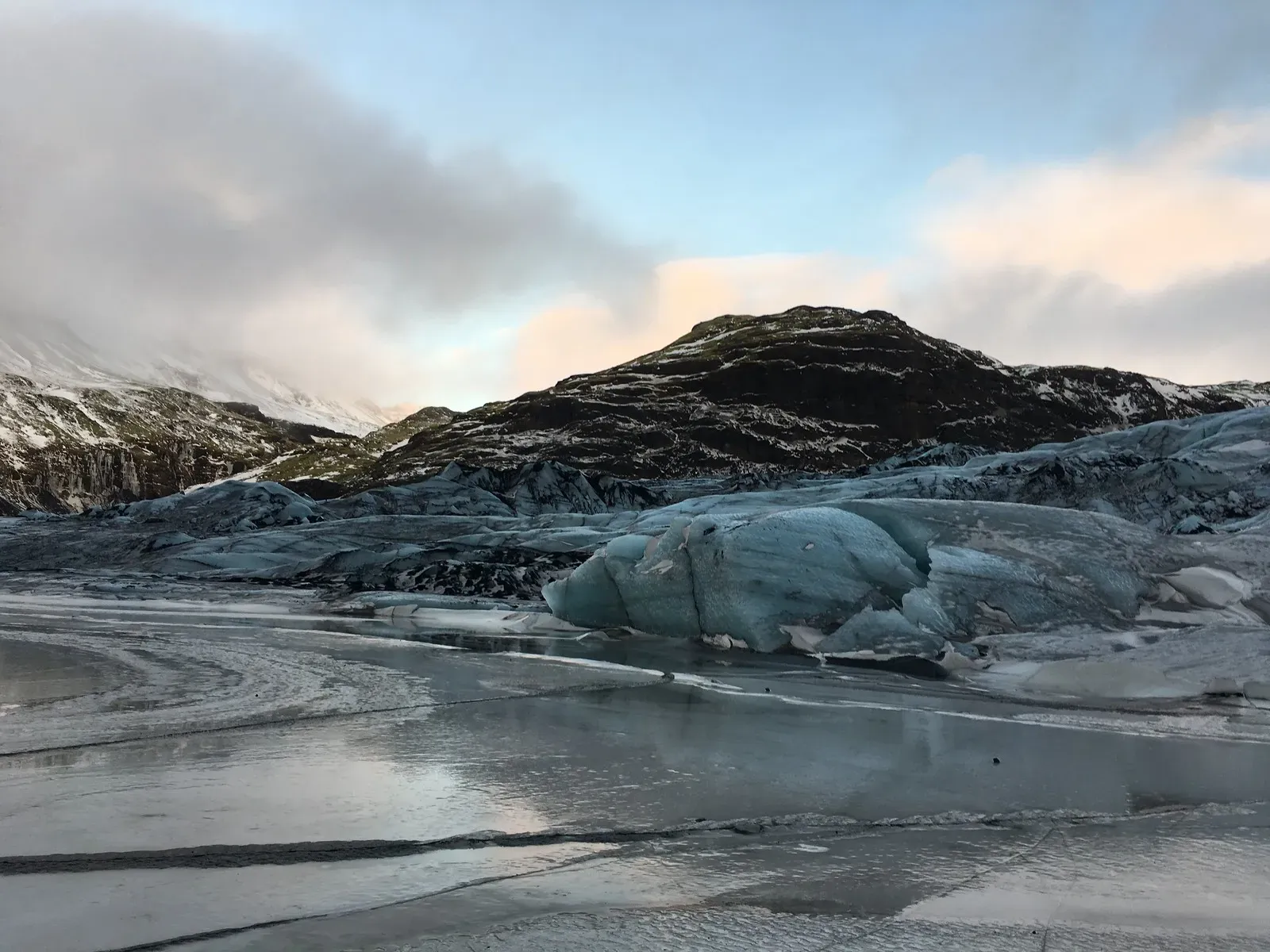
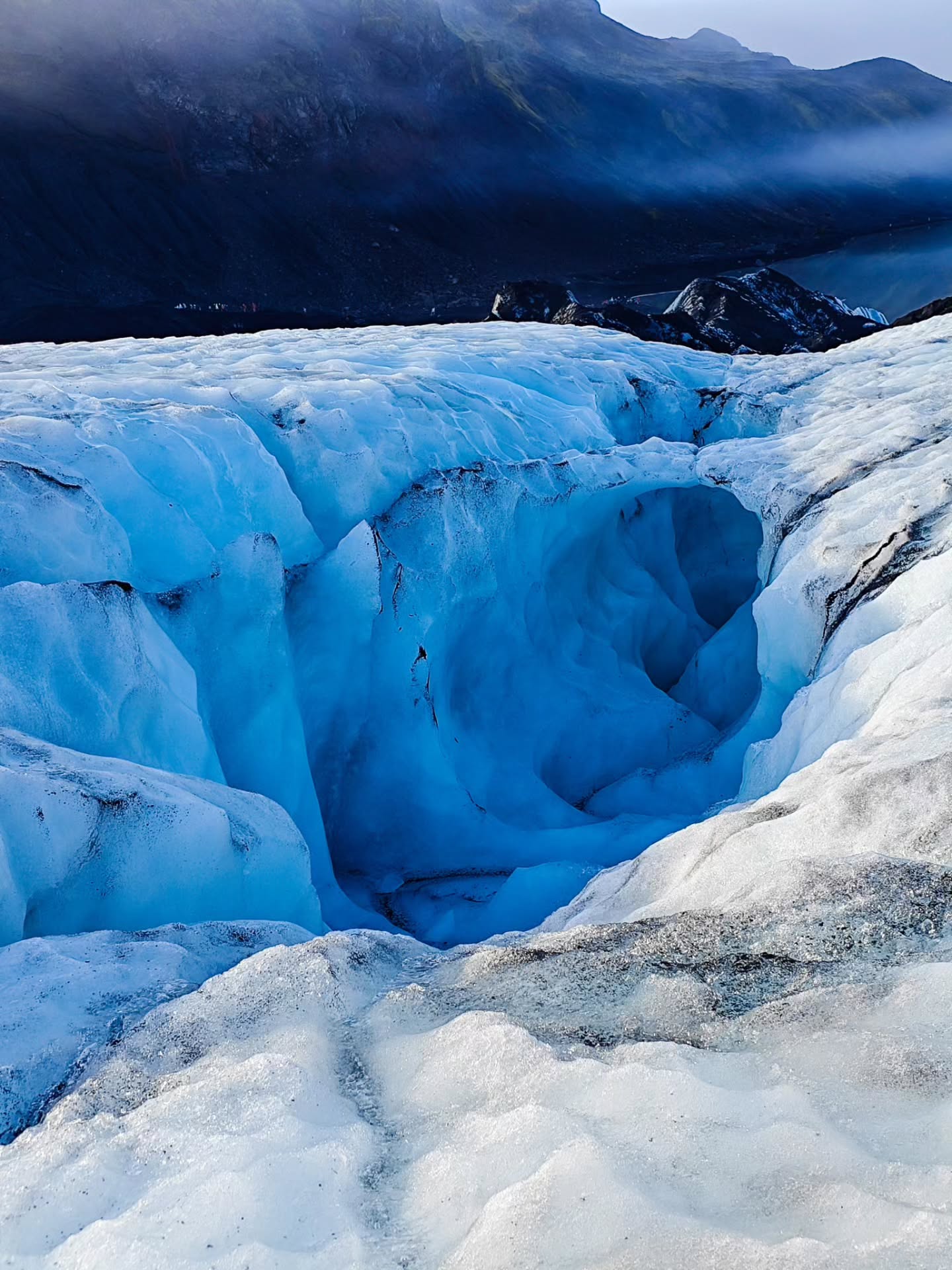
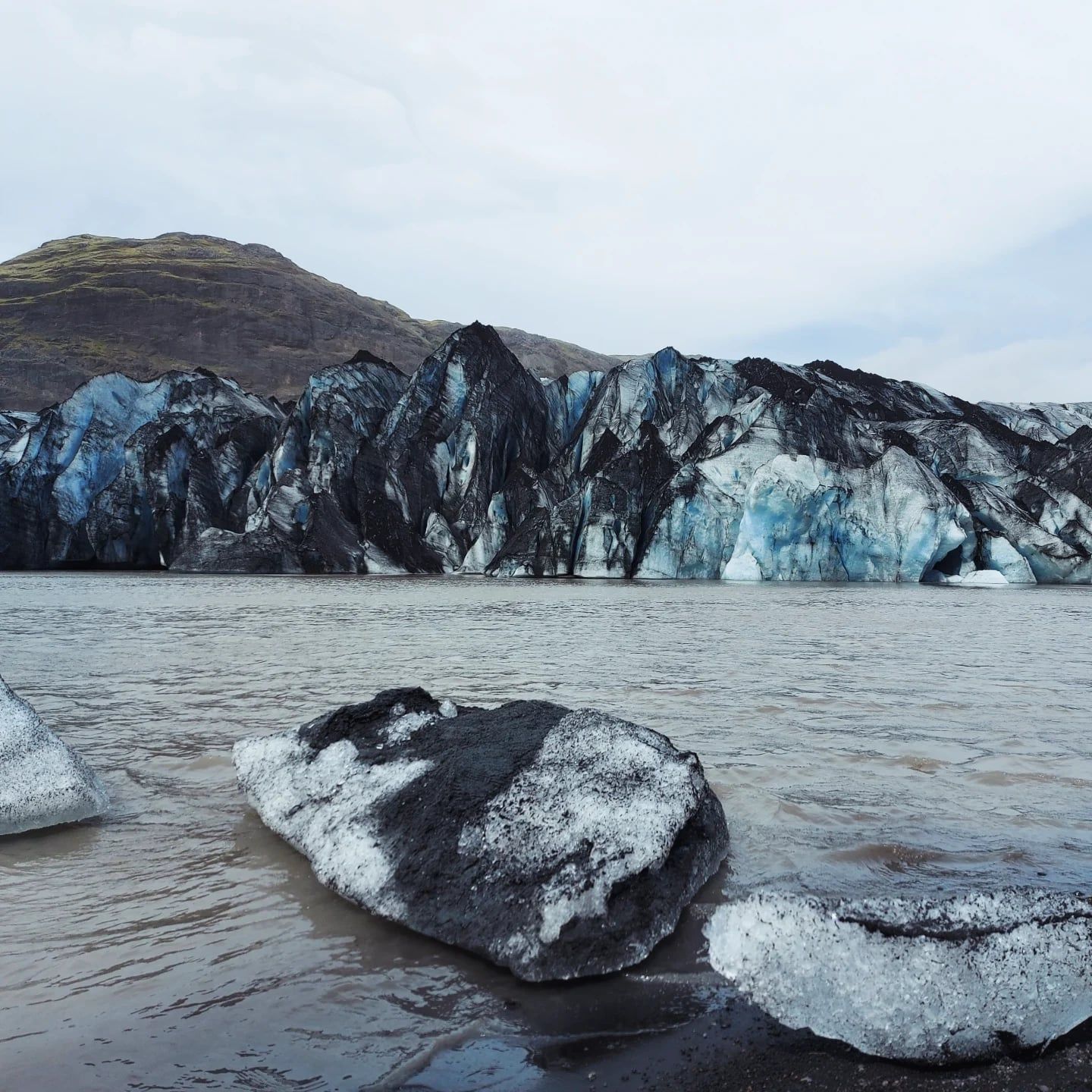
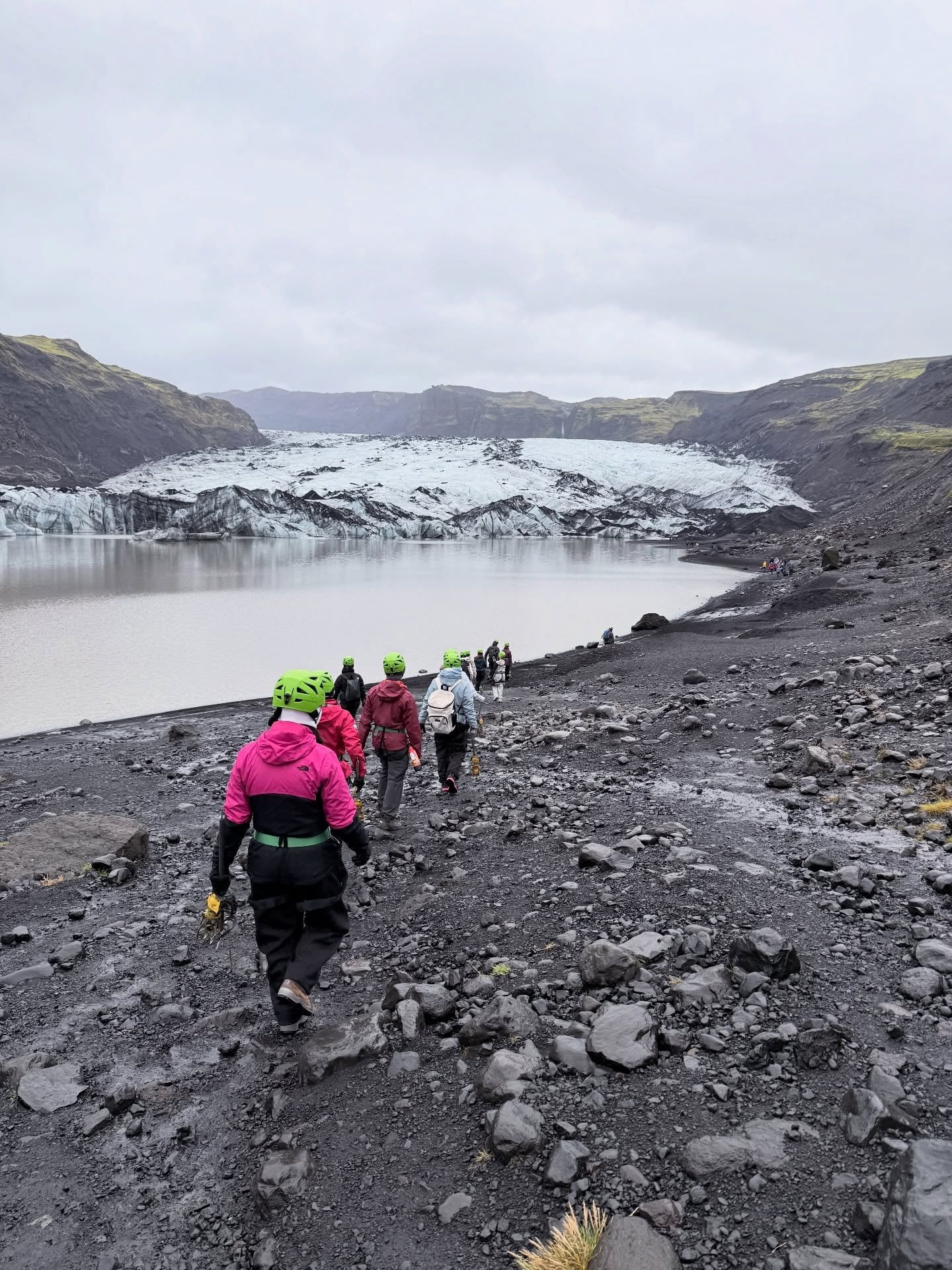
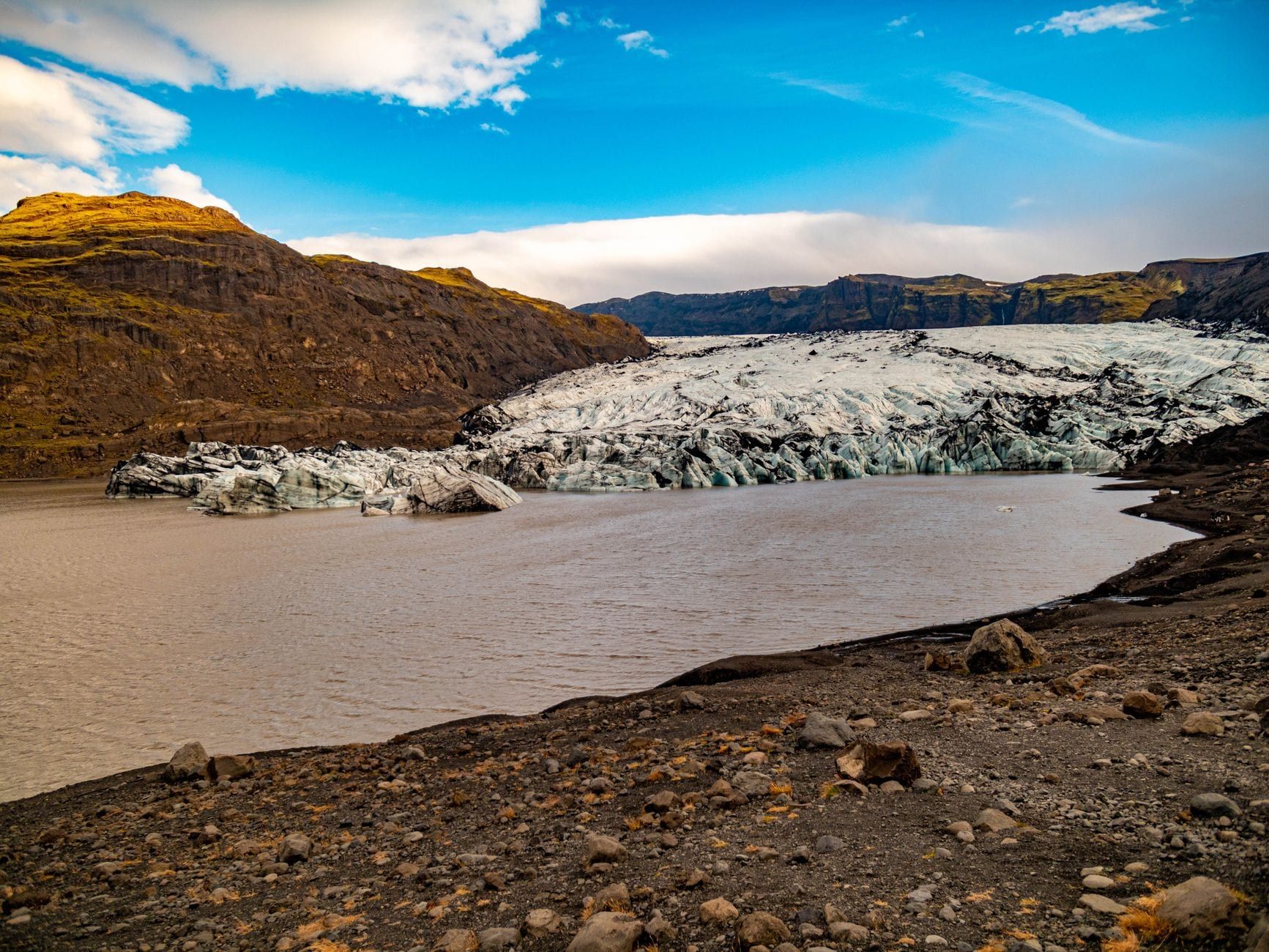
A flat, 15-minute gravel walk ends at a retreating ice tongue streaked with black ash from the 2010 Eyjafjallajökull eruption. You can view the iceberg-dotted proglacial lagoon for free, or strap on crampons for a guided hike across the uneven ice.
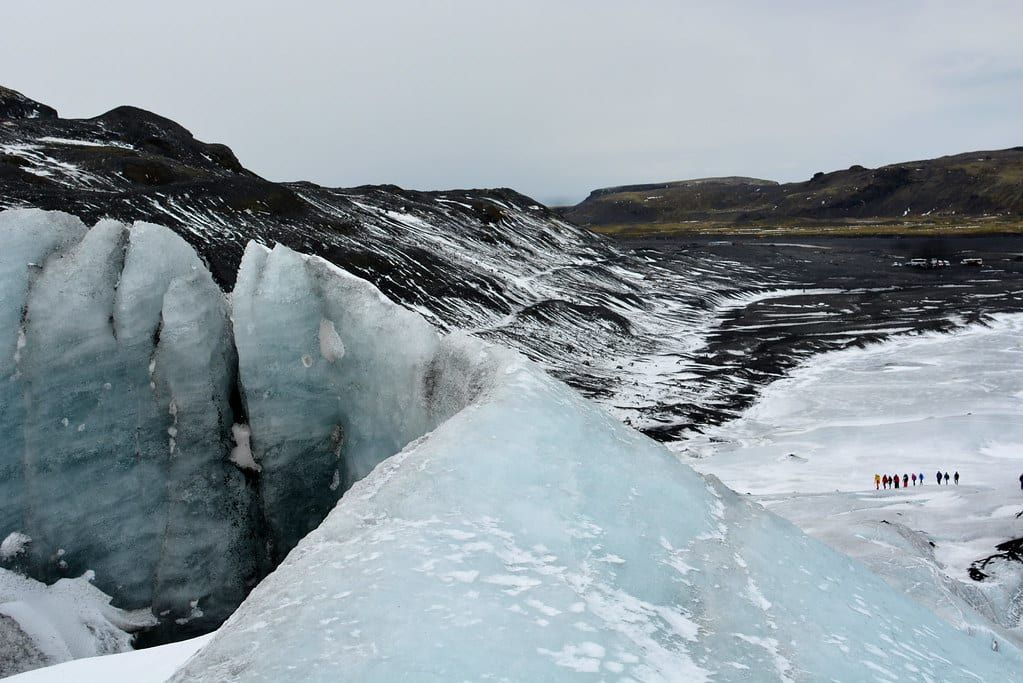
Find Guided ToursSólheimajökull is an outlet glacier spilling off the southwestern edge of the Mýrdalsjökull ice cap in southern Iceland. It's about five miles long and just over a mile wide, sitting directly between the Katla and Eyjafjallajökull volcanoes. Meltwater from its snout feeds the Jökulsá á Sólheimasandi river, which cuts across a black-sand outwash plain before emptying into the Atlantic Ocean. The ice itself is heavily textured. Crevasses, deep moulins, and sharp ice ridges break up the surface, while a proglacial lagoon dotted with floating icebergs sits at the base.
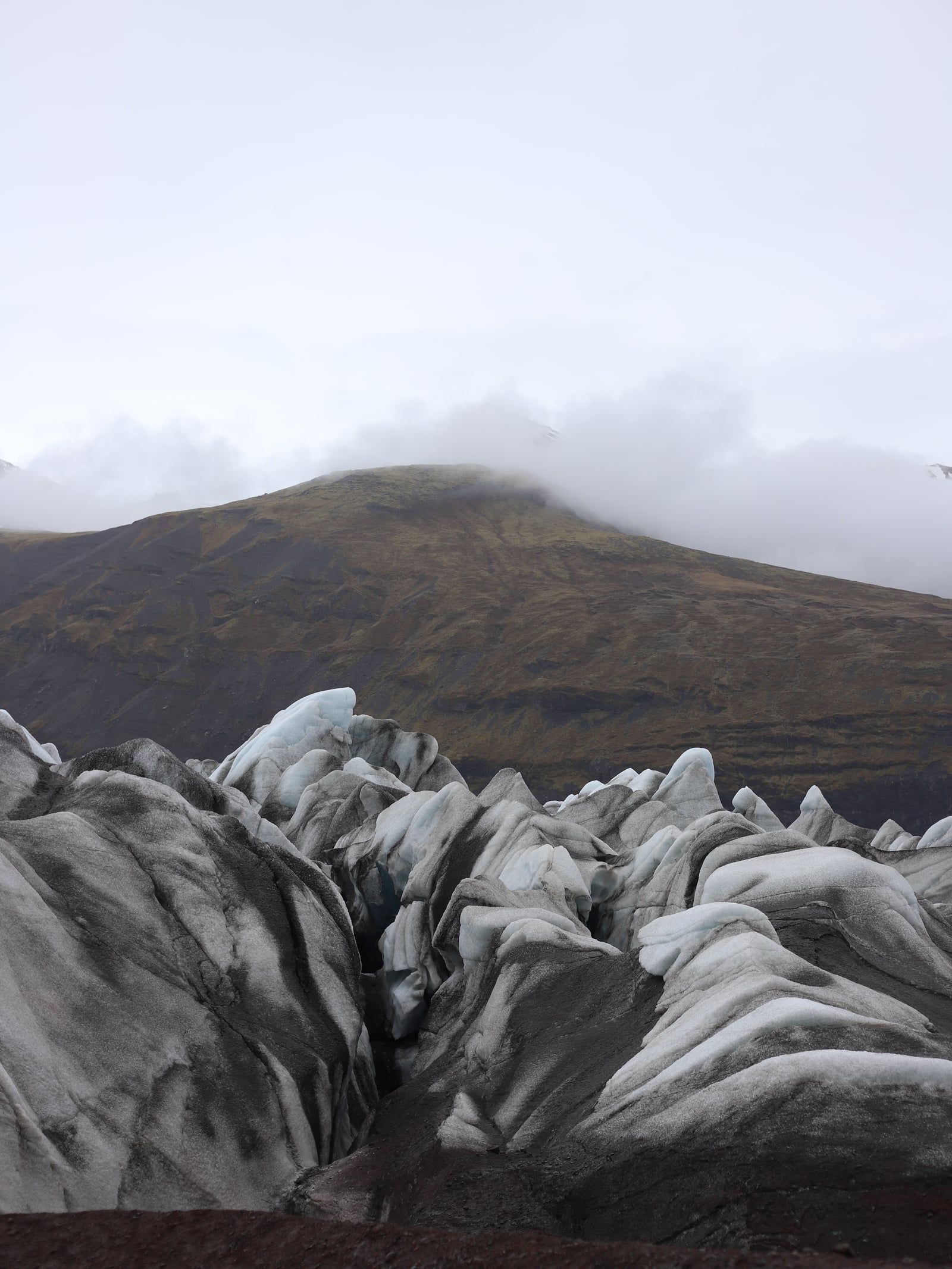
Unlike cleaner white glaciers elsewhere, Sólheimajökull's surface is heavily streaked with dark volcanic ash. Each black band frozen into the ice represents a past eruption. The 2010 eruption of neighboring Eyjafjallajökull left a distinct layer near the surface, adding to the raw, striped appearance of the glacier tongue.
Glaciologists have studied this site for over a century, often calling it a "climate glacier" because it reacts so quickly to warming temperatures. More than a hundred years ago, the leading edge of the ice extended well past where the modern parking lot sits today. Formal tracking by the Glacier Research Society of Iceland began in 1995. Between then and 2014, researchers recorded 887 meters of retreat. Today, the ice continues to melt at an average rate of about 60 meters per year, continuously expanding the lagoon and reshaping the eastern margin.
This rapid retreat is unusually visible because a paved road runs almost directly to the ice. Tourists and glaciologists alike can walk right up to the shifting boundary. But that access isn't without risks. In July 2026, the Icelandic Meteorological Office issued a hazard notice after rapid melting created an unstable ice ridge. Tour operators temporarily suspended trips while scouting safer routes away from rockfall zones beneath the overlooking mountain, Jökulháls.
Discover the full history and cultural significance on our About page.
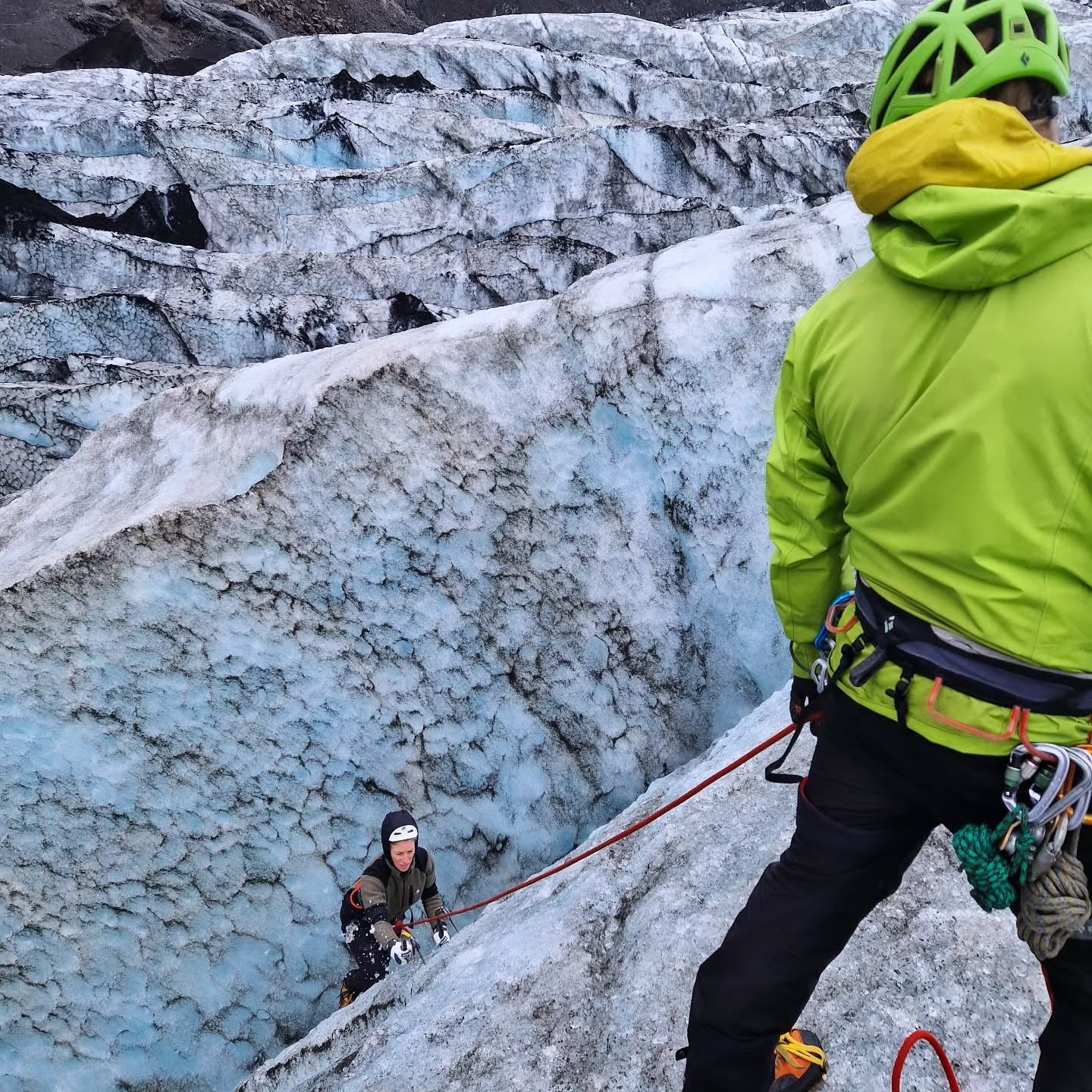
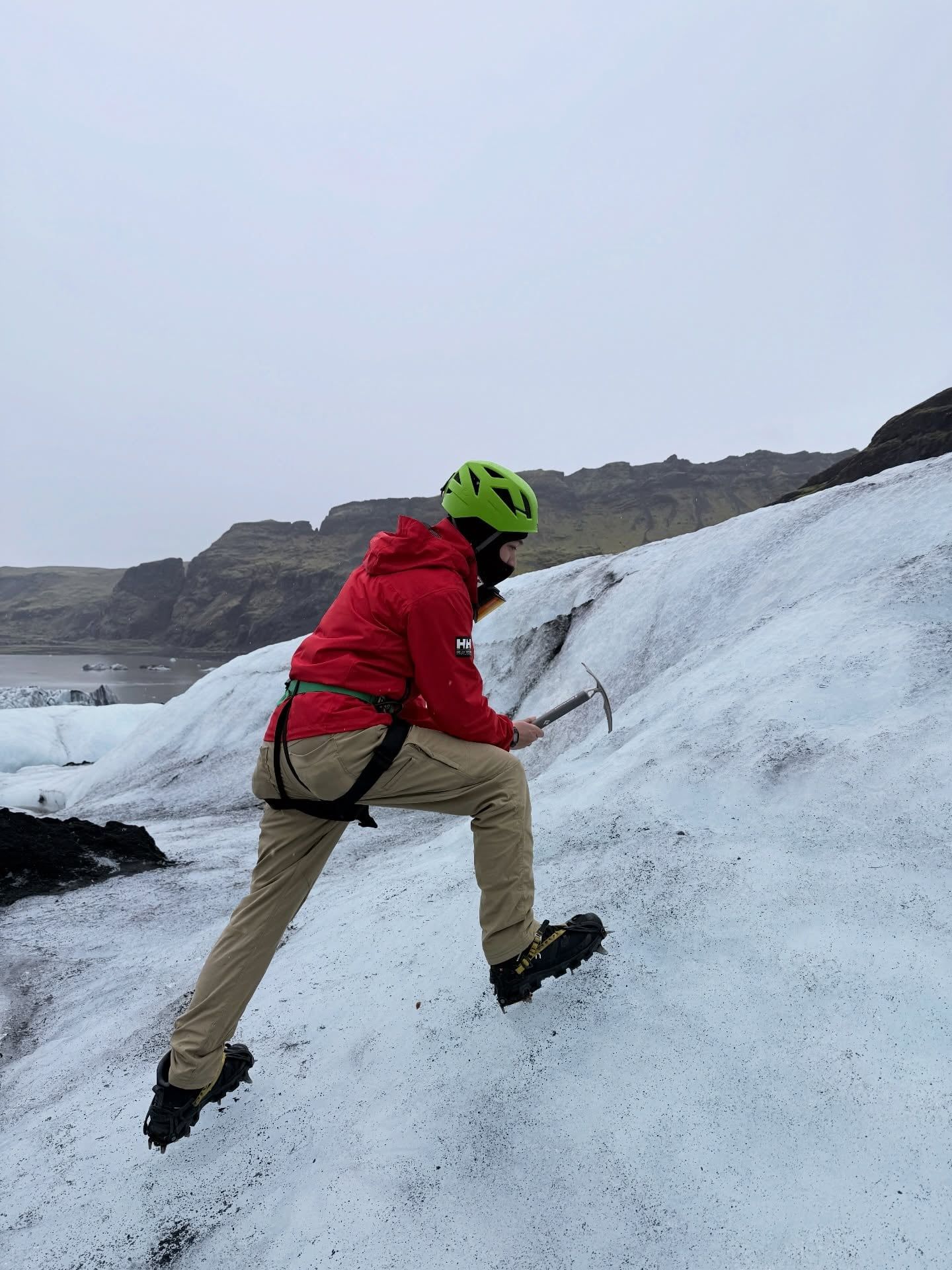
Guides put you on ropes and hand you two ice axes to climb the glacier's vertical faces. You don't need prior experience. Certified instructors teach the basic technique at the base before you ascend the raw ice.
The retreating ice leaves behind a deep lake dotted with icebergs calved directly from the glacier tongue. Kayaking tours put you at water level. You glide quietly past floating chunks of blue ice and dark volcanic ash.
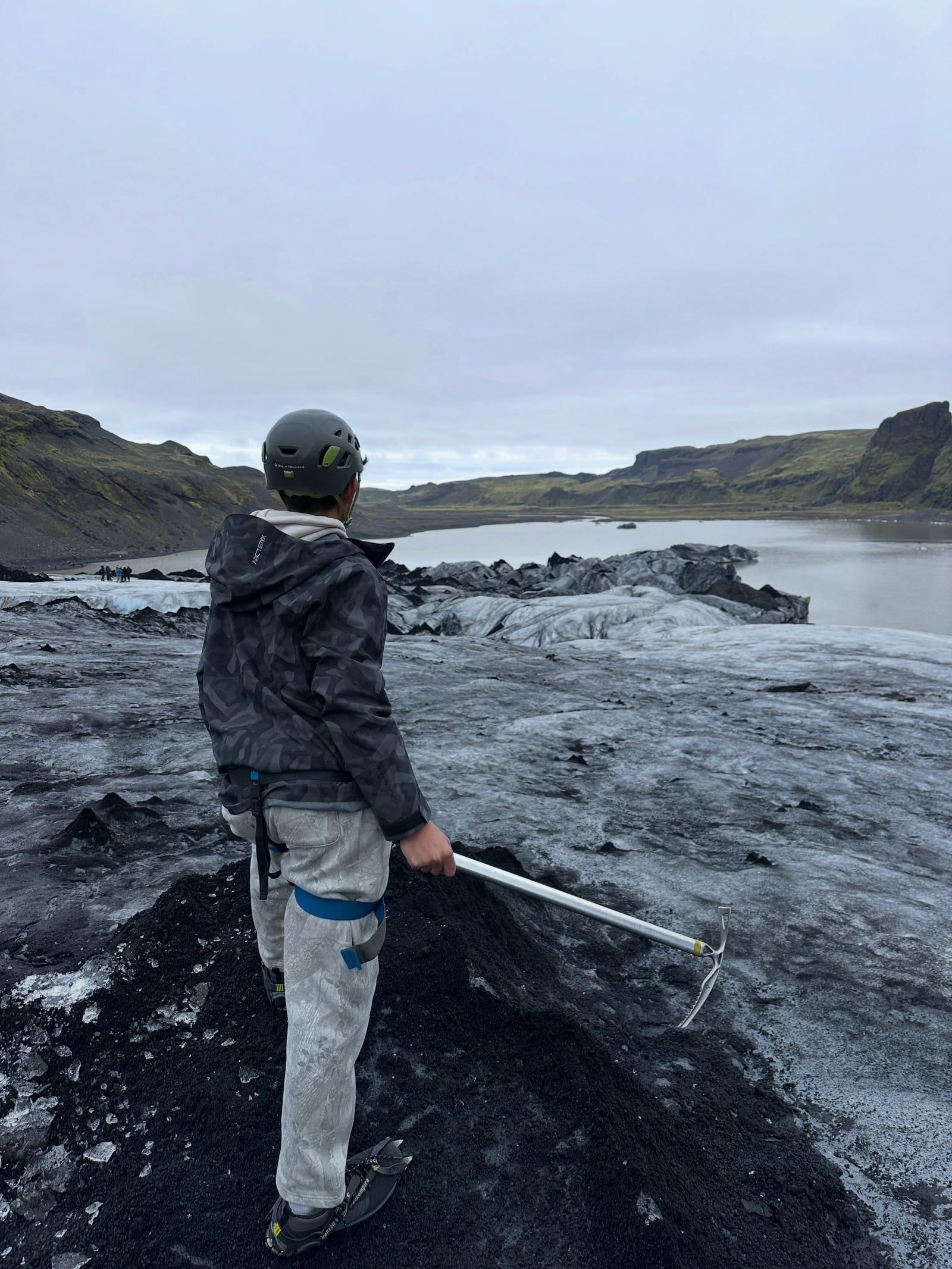
Strap on crampons for a four-hour guided walk covering about 6 kilometers of the glacier surface. You navigate deep cracks and ice ridges. The ice here is heavily streaked with dark ash bands from the 2010 Eyjafjallajökull eruption.
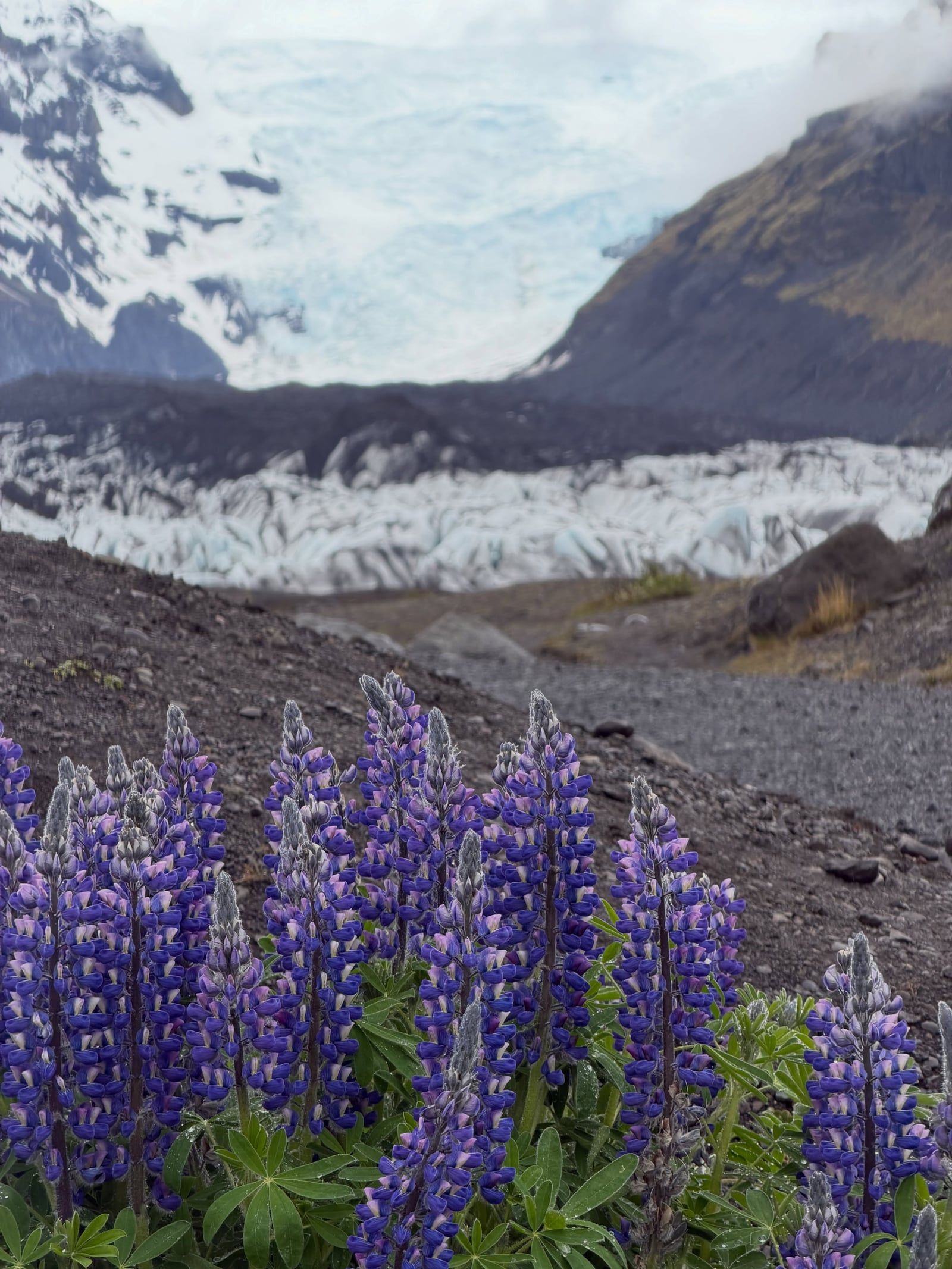
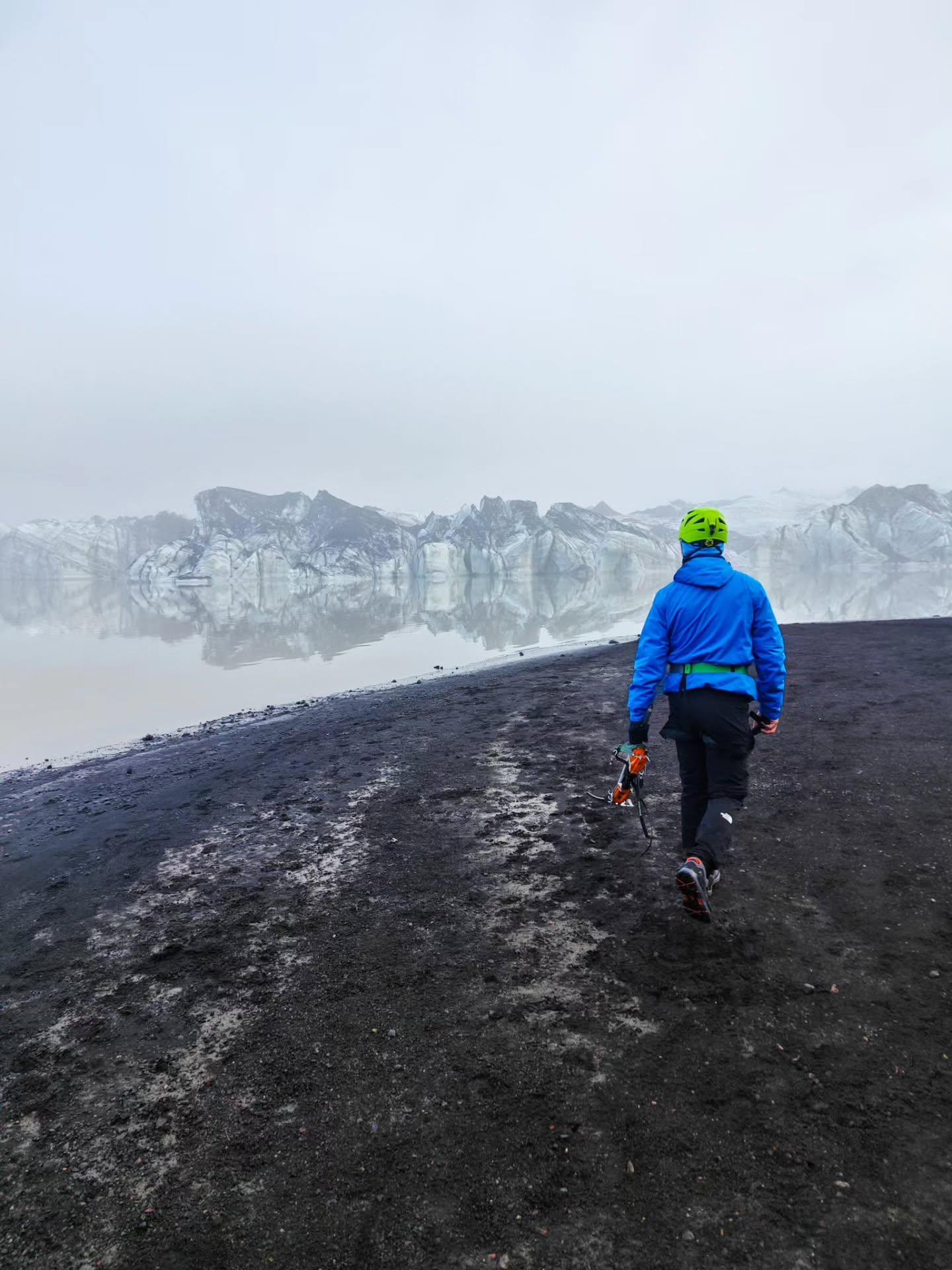
If you skip the heavy gear, a flat 500-meter gravel trail leads from the parking lot straight to the water's edge. It takes about 20 minutes. The path cuts through a quiet valley where bright green moss grips the black volcanic rock, ending at the glacier snout.
Book a guided hike starting at $100, with all safety gear provided and free cancellation up to 24 hours ahead.
Swipe to see more
 Free Cancellation 4h
 Free Cancellation 4h
 Free Cancellation 3h
 Free Cancellation 2h 30min Free Cancellation 4h
 Free Cancellation 12h Free Cancellation 4h Free Cancellation 3h
Plan your trip between May and September for the easiest trail conditions. Long daylight hours give you plenty of flexibility for the drive from Reykjavík, and operators run the widest range of activities, including lagoon kayaking.
May opens the prime weather window with long daylight and clear paths. March and April are a gamble. Lingering winter storms and slippery trails often disrupt scheduled hikes.
The absolute best time for glacier hikes and kayaking. You get maximum daylight for the drive from Reykjavík, and the flat viewpoint trail stays completely clear of ice.
September offers the last stretch of optimal weather. After that, daylight shrinks fast. Late autumn storms begin threatening tour schedules and making the gravel approach trail harder to walk.
Short daylight and icy, slippery trails make this the toughest time to visit. High winds and winter storms regularly close Road 221. Freeze-thaw cycles also increase rockfall risk.
Sólheimajökull has no gates or fixed hours. You can walk to the viewpoint 24/7, year-round. The parking lot is always open, but sleeping in your vehicle or camping overnight is prohibited.
| Category | Price |
|---|---|
| General Admission (Viewpoint) | Free |
| Vehicle Parking | 750 ISK |
| Guided Glacier Hikes | 11,000–35,000+ ISK |
| Restroom Use | 300 ISK |
Walking the flat 500-meter trail to the glacier viewpoint costs nothing. But stepping onto the ice requires booking a guided tour, since operators supply the mandatory crampons, helmets, and ice axes. Pay your parking fee through the Parka app within 24 hours of leaving. You don't need a cell signal right at the lot.
For complete schedules and ticket prices, visit our Hours & Fees page.
Most visitors drive themselves along the Ring Road, turning onto a short paved side road that ends right at the ice. If you lack a rental car, you'll need to book a guided day tour from Reykjavík, as public transit doesn't reach the parking lot.
📍 End of Road 221 (Sólheimajökulsvegur), South Iceland (Coordinates: N63° 31' 50.775" W19° 22' 15.185")
Drive east on Route 1 for 158 kilometers. The route passes the Seljalandsfoss and Skógafoss waterfalls. Turn onto Road 221, also known as Sólheimajökulsvegur. This short paved side road runs directly to the glacier parking lot. You pay a 750 ISK parking fee via the Parka app once you arrive.
Companies like Arctic Adventures, Guide to Iceland, and Icelandic Mountain Guides run full-day South Coast trips from the capital. They handle the driving and usually include a guided hike on the ice. These buses also stop at nearby sights like Reynisfjara beach and Skógafoss. It removes the stress of winter driving, though you give up control over your schedule.
Vík í Mýrdal is the nearest town with fuel, food, and lodging. Head west on Route 1 for about 32 kilometers. Take the turnoff for Road 221 and follow it to the end. The drive is short and simple. It makes an easy morning detour for travelers already road-tripping the South Coast.
Taking public transit to the glacier is a hassle. Strætó buses run from Reykjavík down to Vík. But no direct route connects the town to the glacier parking lot. Without a car, you must arrange a taxi or hitchhike the remaining 32 kilometers. Skip this method if you have limited time.
For detailed transport options and routes, visit our Directions page.
You'll owe a 750 ISK fee to leave your car at the Road 221 lot. Download the Parka app to handle the payment. You have up to 24 hours after leaving to pay it. That means you don't need to stress about finding a weak cellular signal on site.
Amenities at the glacier are sparse. A basic paid toilet sits near the parking lot and costs about 300 ISK per use. Keep a card or small cash handy before starting the 500-meter walk to the viewpoint. You won't find another restroom out by the ice.
Guided glacier hikes demand sturdy boots with solid ankle support to safely attach your crampons. Ordinary sneakers or soft walking shoes won't cut it. If you don't own a pair, operators rent them for around 1,500 ISK. Sort this out when booking your tour to guarantee your size.
The terrain shifts constantly. In July 2026, the Icelandic Meteorological Office flagged rockfall risks from the Jökulháls mountain and unstable ice ridges near the lagoon. Stay alert for rumbling sounds on the access trail. Minimize your time standing directly beneath steep slopes during heavy rain or freeze-thaw cycles.
Sólheimajökull sits right on the main South Coast route between Skógafoss and Vík. Day-tour buses from Reykjavík start rolling in by mid-morning and stick around through early afternoon. Get to the parking lot by 8:00 AM. You'll have the viewpoint and the gravel approach trail mostly to yourself.
The flat trail to the viewpoint is safe for young children. Stepping onto the actual ice requires meeting strict operator limits. Guided hikes set a minimum age of eight. Kids also need a shoe size around EU 34 or 35 to securely fit the mandatory metal crampons.
This 60-meter waterfall drops in a massive, unbroken curtain. You can view the falls from the flat base or climb a steep staircase to reach a panoramic viewing platform at the top.
Hexagonal basalt columns rise directly from the dark sand, facing out toward jagged sea stacks. The waves here are notoriously powerful and dangerous, so keep a safe distance from the water line.
The rusted metal skeleton of a 1973 U.S. Navy DC-3 sits abandoned on a barren outwash plain. Reaching the site requires a flat 4-kilometer walk or a short shuttle ride from the dedicated parking area.
Read what travelers share about their experience visiting Sólheimajökull Glacier — from practical tips to personal highlights.
Planning advice, comparisons, and practical tips.
Paddling a kayak between floating icebergs with a glacier tongue looming a few hundred meters away is not something most Iceland itineraries can…
Sólheimajökull is the glacier most South Coast road-trippers actually end up walking on, not just photographing from a pullout. A paved side road…
Walking to the viewpoint is free and requires no tickets. You just pay a 750 ISK parking fee through the Parka app within 24 hours of your visit. There is also a 300 ISK charge if you need to use the restroom at the trailhead.
There are no direct public buses to the parking lot. You will need to book a guided day tour from Reykjavík, which takes about 2.5 to 3 hours each way and costs roughly $130 to $250. Taking a public Strætó bus only gets you as far as Vík, leaving you 32 kilometers short of the glacier.
The flat, 500-meter walk to the viewpoint takes about 30 to 40 minutes round trip. If you book a guided hike onto the ice, expect to spend 2.5 to 5.5 hours on location depending on the operator.
Kids can walk the gravel trail to the viewpoint, but they must be at least 8 years old to join a guided hike onto the ice. They also need a shoe size of at least EU 34 to fit the mandatory crampons. An adult must accompany them at all times.
Wear warm, waterproof layers year-round because wind coming off the ice is cold. You need sturdy hiking boots with ankle support for the guided hikes, though operators rent them out for about 1,500 ISK. Ordinary closed-toe shoes work fine for the viewpoint path.
The 500-meter trail from the parking lot to the viewpoint is flat gravel and doable with assistance. It lacks a paved surface and gets uneven in spots, so it requires some effort. Wheelchairs cannot go onto the glacier itself.
Stepping onto the ice independently is strongly discouraged due to hidden crevasses and shifting ridges. You must book a tour with a certified guide who provides the required crampons, helmet, and ice axe. You can walk to the edge of the proglacial lagoon entirely on your own.
Check the Icelandic Meteorological Office website before you go. In July 2026, the IMO issued a hazard notice for rockfalls and an unstable ice ridge, forcing operators to temporarily suspend hikes. The access route sits under the Jökulháls mountain, making rockfall a constant risk during heavy rain or freeze-thaw cycles.
Browse verified tours with free cancellation and instant confirmation.
Find Tours
